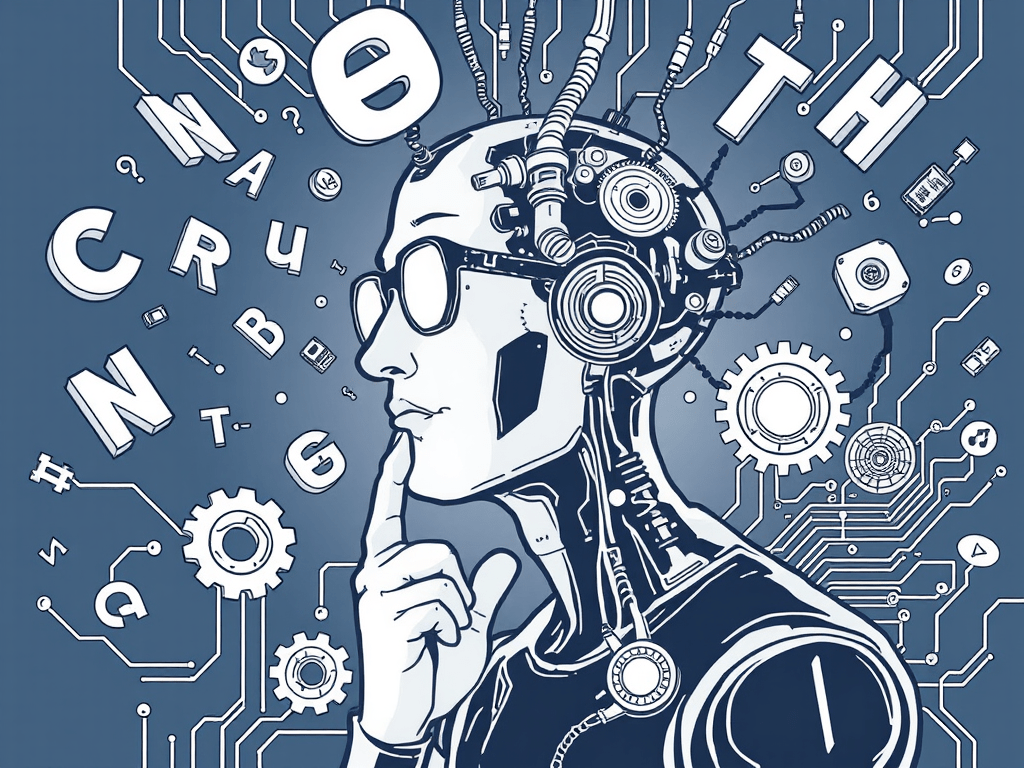
Here are the premises. Try to put yourself in this situation.
- Human languages are technologies. They are created by/with us. We need help though. No word “cat” without cats. It’s about relations, particularly relations between/among words.
- As humans we have many kinds of thoughts and feelings, I am defining–for the purposes of this experiment–that all conscious thoughts have a language component.
- Taken together, conscious thoughts are cyborgian in the sense that they arise at the intersection between our bodies and these technologies. This has been the case since humans began demonstrating behavioral modernism. So, for a while now.
I won’t say much about when we started thinking about our thinking as something that might cyborgian, but obviously Plato had his concerns, so no later than that. You can fill in the details I imagine. I’ll just point out that over the years the particulars of the symbolic-media technologies have changed.
In this experiment, I can look at rhetoric’s cultural salience in relation to the media-technological function. In Heideggerean terms, rhetoric becomes salient when media technologies are present rather than ready-to-hand. I.e., when they appear broken. We could apply this lens to democracy in Athens or in colonial America. We could see it in the practical rhetoric instruction that follows industrialization in the late 19th century, and again in the post-war era in higher education when English departments became the foundation for literacy instruction. Then we hit the post-industrial 1970s. Part of what is going on here is an expanding media infrastructure in the Internet that by the end of the century has generated a computational/software culture that creates the digital archive on which frontier AI has been built.
How can we understand the emergence of the cyborg mind? Perhaps in terms of its value in epistemic foraging or in planning depth, as a way of keeping track of tribal relationships. Who knows, really? But I’m fairly sure we weren’t being driven by a telos of uncovering reality’s deepest secrets; that’s just us over-fitting to our surprisal reduction drive. The conscious mind changes with access to media practices, technologies, and environments–both individually and collectively as assemblages/populations/networks (in terms I might employ).
I offer this up to point to a salient rhetorical moment, when the technologies of consciousness are broken, a digital interregnum as I term it, a chronopolitical matter of concern. I have been writing about digital literacy as a wicked problem for a while, despite the perspectives of EDUCAUSE and others that it was a solvable problem.
How about now?


 Alex Reid, Professor of Digital Rhetoric, Media, and Artificial Intelligence
Leave a comment