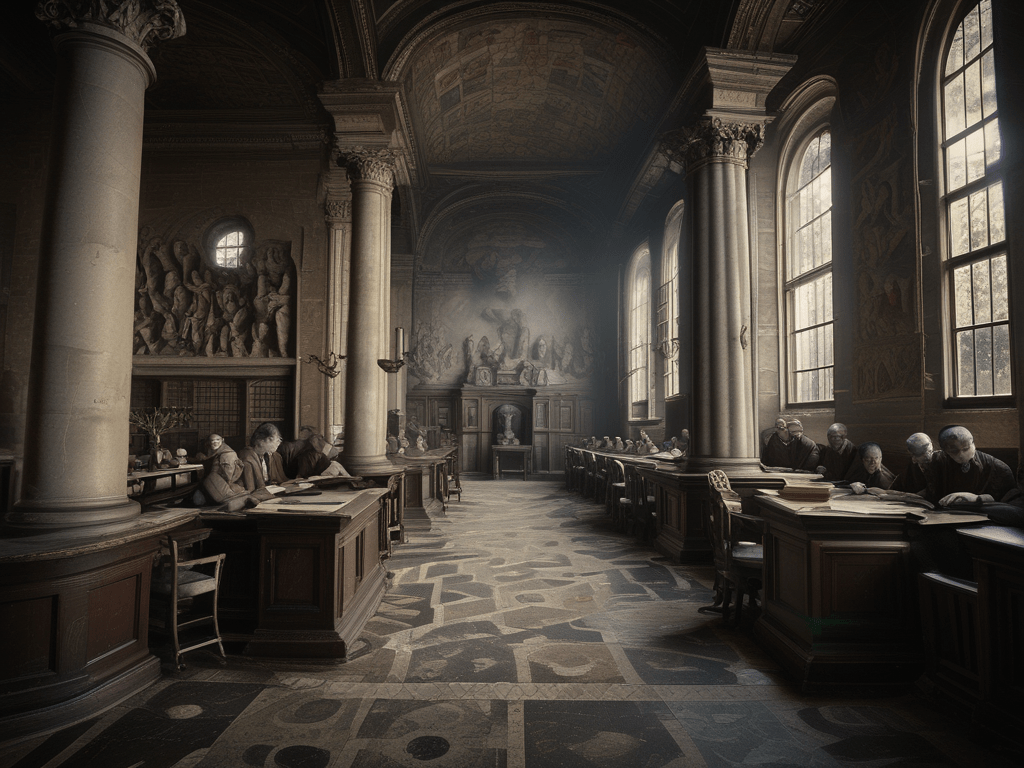
If you are in the humanities, consider the faculty and curriculum in your department. How do the specializations, the research, and the courses offered by your contemporaries compare with your predecessors 10, 20, or even 30 years ago? Some of them, undoubtedly are the same people. If you count graduate school, I’ve been at this for 30 years.
This post isn’t about specific faculty or the areas of study in which they specialize. It’s about collective decisions. Decisions made by departments, colleges, and universities. We can stick with the passive voice. Decisions were made..
Contemporary humanities disciplines formed 100-150 years ago except for the various studies disciplines, which formed around 50 years ago as offshoots of the older disciplines. I think it is fair to say that 90% of the content of these disciplines concerns events prior to the 21st century. And aside from a few courses (and faculty) specializing in film or popular music, the content of the humanities, even when it addresses contemporary culture, focuses on print culture.
These were decisions. Decisions made by departments, colleges, and universities to minimize humanities’ attention to mass media or digital culture. Decisions were made to maintain a focus on the belletristic, on high/fine arts, rather than the everyday experience with media cultures. Communications departments made a different decision, but they aren’t part of the humanities.
If that decision had gone differently, would we still be in this situation? Who knows? I’m not going to make some counterfactual argument. It’s not interesting. If things had gone differently then yes, things probably would be different now. So what?
But we do have decisions to make now. To be clear, academic disciplines regularly evolve. What would medicine and the life sciences be like if they ignored CRISPR? What if engineers ignored the development of new materials? What if computer scientists refused to believe that PCs were anything more than little computers put together by enthusiasts in their garages? What if academic filmmakers refused to teach about digital cameras and editing software?
And things have changed in the humanities. Critical theories have come and gone. Content has become more diverse, more inclusive. The politics of the humanities have changed. And the world has changed radically around the humanities. Student interest in the humanities have declined…. significantly. Things have changed.
Programs in media arts, like in my department, face similar challenges now with generative AI. While visual and performing arts have remained well-enrolled in this century, AI threatens many of the careers associated with our curriculum. As I’ve said to my colleagues, we may have creative ideas about how to build our practices on top of AI, but what will the parents of our prospective students think when they read articles like this one in The NY Times [$]?
I don’t think it is practical to begin with some ideal of a reformed humanities that says we should be doing x, y, and z. To me it has to begin with some recognition that we can’t keep doing what we are doing unless we want to watch the humanities wither and die. There has to be some collective willingness to pursue change.
 Alex Reid, Professor of Digital Rhetoric, Media, and Artificial Intelligence
Leave a comment